

Keynote Speakers

A. Prof. Marcus T. Anthony, Beijing Institute of Technology (Zhuhai), Futures Strategist at Research Center for Greater Bay Area Higher Education and Cultural Policy Unit, China
马思远副教授,北京理工大学珠海学院,大湾区高等教育和文化政策研究中心期货策略师,中国
Research Area: Futures Studies、Education, including transforming the Chinese education system、The development of China and the Greater Bay Area、Human intelligence、Sense making in the digital age
研究领域:未来研究,教育,包括改变中国的教育体系,中国和大湾区的发展,人类智慧,数字时代的感官
Title:Education, Artificial Intelligence and Embodiment in the Age of Machines
Abstract:
Educators and policy makers are often required to quickly assess information on trends which are likely to affect education and learning in the near and medium-term future. This includes being able to predict changes in AI, technology, business and economy. An important aim is to be able to equip students with the skills and aptitudes to thrive in future workplaces and societies where the pace of change is ever-increasing.
Yet accurate prediction of technological innovation, including how to use that technology, is not enough. Nor is a narrow focus on work, business and productivity. We must also think carefully about what kind of society we would prefer to create, and how to bring it about. Education cannot be merely about technical skills. This issue highlights the distinction between education and training. Education should continue to encompass a wide array of areas: including learning how to think and how to learn, personal development (including resilience and adaptability, and mindfulness), critical and creative thinking, ecological awareness and so on. We cannot allow trends to blindly dictate the future.
The first part of this talk will identify key trends in education, society and artificial intelligence: probable and possible futures. The second part will suggest what we might like to challenge in regard to those trends: preffered futures. Problems and opportunities within these areas will also be highlighted.
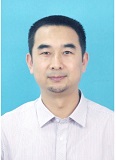
A. Prof. Cunping Yun, Department of Arabic Studies , Northwest Minzu University, China
云存平副教授,西北民族大学,中国
Research Area: Arabic Linguistics and Culture
研究领域:阿拉伯语言学和文化
Title:A brief introduction of the development of Matulidi school’s theological thought in China
Abstract:
This introduction explores the development of Matulidi school’s theological thought in China. Maturidi school is one of the two pillars of Sunni sect in Islamic theology, which has far-reaching influence on Muslims in the countries along the Belt and Road. It established a disciplinary system aimed at setting a theological foundation to demonstrate the Islamic teachings and create a harmonious atmosphere in the pluralistic society. The system focused not only on the role of reason but advocated religious tolerance and moderation which constitute Sunni tradition of the doctrine and became an ideological source of the Muslim Moderatism throughout the ages. Chinese Muslim scholars inherited the doctrines of the Maturidi school, ang made innovations and developments on it. they absorbed and referred to the ideological theories of Sufism and the neo-confucianism, on the basis of inheriting the open, rational, moderate and neutral ideological concepts of Maturidi School. Like Maturidi school in other parts of the world, Chinese Maturidi school has its local pecu- liarities. The study of the thoughts of the Maturidi School in China is not only helpful to establish and strengthen partnerships among the countries along the Belt and Road, but also helpful to building a community with a shared future for mankind.

Prof. Carlotta Viti, Research Center for History and Culture, Beijing Normal University (Zhuhai Campus) & UIC
Carlotta Viti教授,
Research Area: Linguistics (both historical linguistics and general linguistics); Indo-European languages (especially Latin, Ancient Greek and Old Indian)
Title:“The use of language variation and stylistic variation in literary texts”
Abstract:
This paper discusses the manner how different language varieties may be used in a literary text in order to express different styles or linguistic registers. It is acknowledged that a higher or lower register may be conveyed by diglossia in a speech community, which may use the vernacular language in daily life and the codified language in more official situations. An example of this can be seen in China in the variation between Mandarin Chinese and the local language for more or less formal activities. It has not been adequately investigated, however, how diglossia may be exploited in the very same literary text to portray characters of higher or lower social status as well as more conservative or progressive social and cultural attitudes. Neither has been much examined how, apart from diglossia, these socio-cultural aspects may be expressed in a text by using lexemes having a different source. In the English language, for example, inherited Germanic words compete with French borrowings; the latter usually belong to a higher register. In French, words going back to Vulgar Latin compete with cultivate Latinate terms. Thus, diglossia is just the most evident manifestation of a much broader phenomenon concerning the use of two (or more) language varieties for stylistic purposes. I will illustrate this phenomenon with examples drawn from various ancient and modern languages belonging to different families and to different geographical areas, and I will try to show the formal and functional features of this linguistic competition. Moreover, I will discuss the impacts of such a language variation on the establishment of different literary genres and its challenges for a theory of translation.
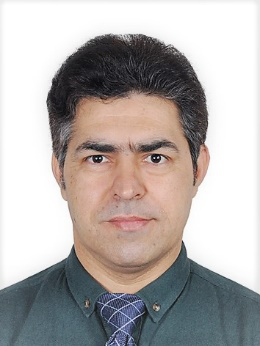
Prof. Nadeem Akhtar, School of Urban Culture, South China Normal Uni
Nadeem Akhtar教授